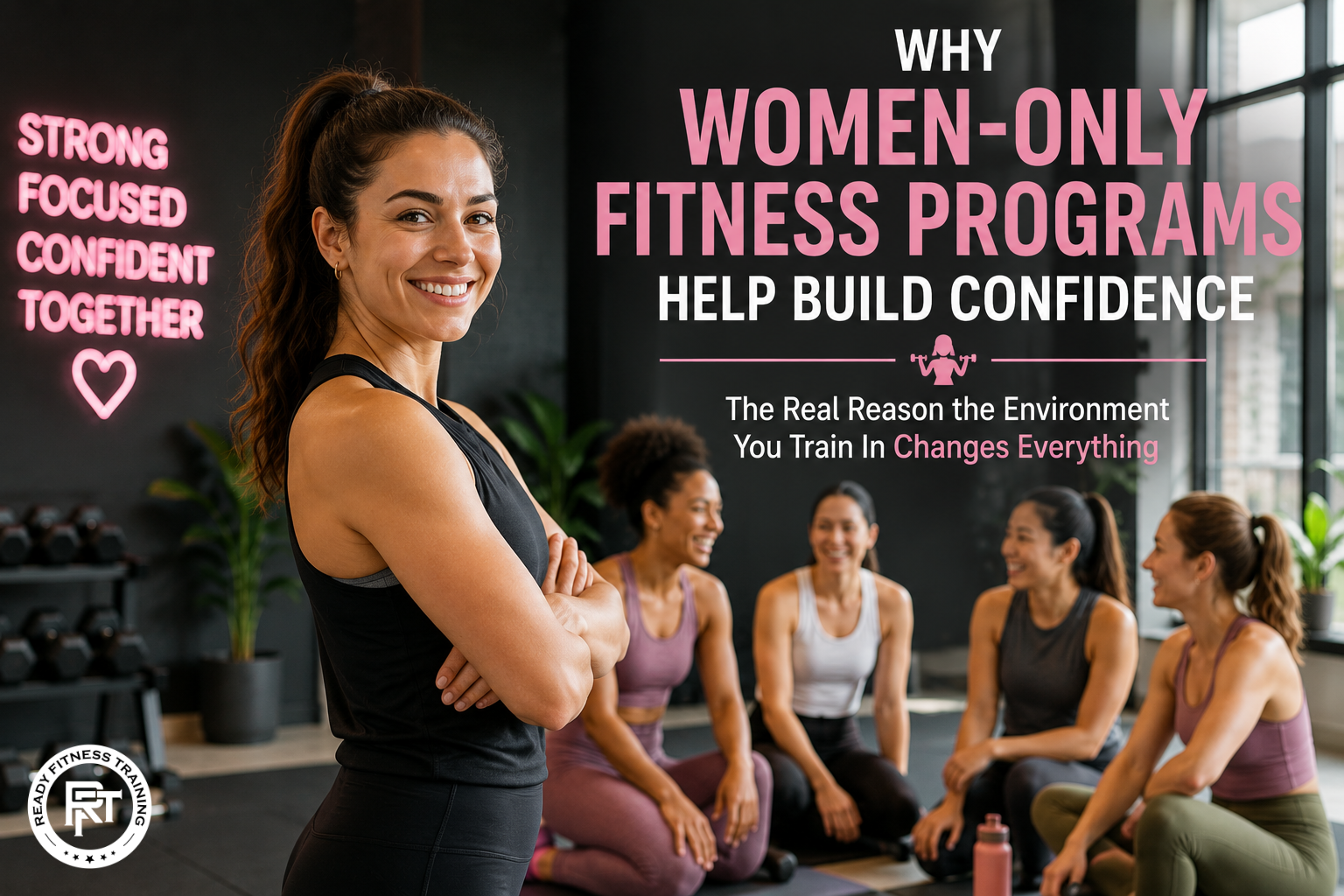
Why Women-Only Fitness Programs Helps Build Confidence
Updated 2025 | The Real Reason the Environment You Train In Changes Everything
Written by certified women’s fitness practitioners | For women at any stage of their fitness journey
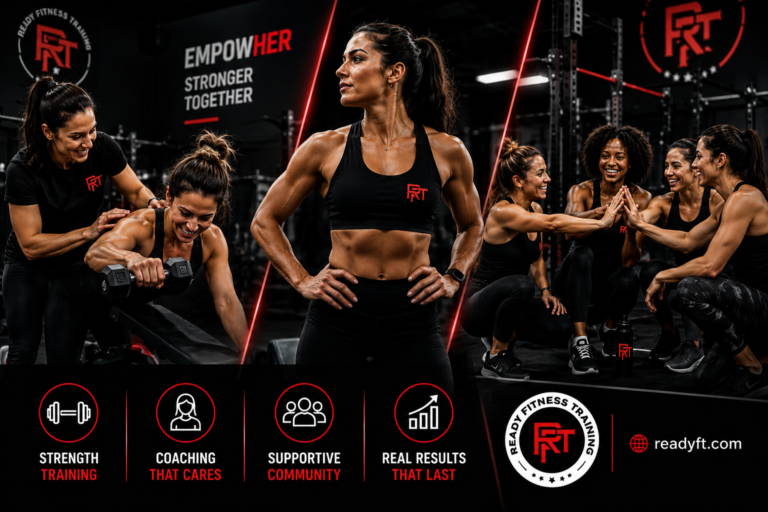
Ask a woman who has tried both a mixed gym and a women-only program which one she preferred, and most will not hesitate. It is not just that one was more comfortable. It is that in one of them, something shifted. She tried harder. She asked questions she would never have asked in front of men. She started picking up weights she had assumed were not for her. She came back the following week.
The confidence that empowher fitness is supposed to build does not emerge automatically from working out. It builds in environments that allow women to focus on what they are doing rather than on how they look doing it. That distinction sounds small. The effect is not.
What the research and real experience both show: women who train in women-only environments show greater improvements in physical confidence, higher rates of programme adherence, more willingness to attempt challenging exercises, and stronger peer support connections than those in mixed-gender settings. The environment is not separate from the result. It is part of it.
This article explains exactly why — and what it means for finding a fitness programme that actually works for you.
The Problem That Women-Only Programs Are Actually Solving
There is a reason ‘gym anxiety’ is so commonly discussed among women and so rarely discussed among men. It is not just personality. It is environment.
Gyms designed around mixed-gender use tend to reflect the fitness culture that historically built them: heavy weights in the centre, cardio around the edges, mirrors everywhere, and an unspoken hierarchy of who belongs in which section. For women — particularly those new to strength training or returning to exercise after a significant break — navigating that environment while also learning to deadlift correctly is simply too much. Many give up before they get started, or confine themselves to the treadmill and yoga mat and wonder why they are not seeing results.
This is not weakness. It is a rational response to a genuinely difficult social environment. Research on exercise psychology consistently finds that perceived competence — how capable you feel relative to the people around you — is one of the strongest predictors of whether someone continues exercising. When women are surrounded by people who appear more experienced, more capable, and more comfortable in the space, perceived competence drops. And when perceived competence drops, attendance drops with it.
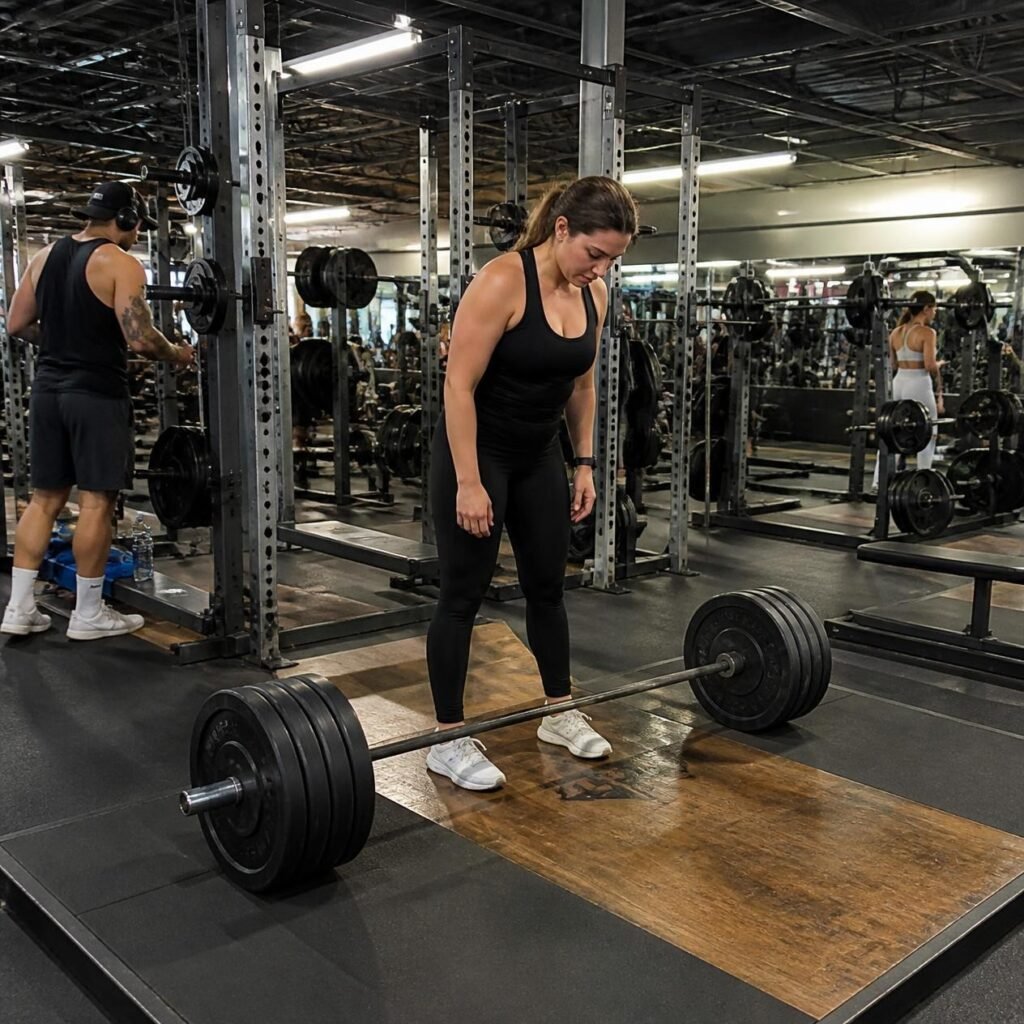
Women-only programmes remove this dynamic entirely. When everyone in the room is at a similar social starting point — navigating an unfamiliar environment, figuring out the movements, not entirely sure they belong — the barrier to entry collapses. And once that barrier is gone, the confidence-building that fitness is supposed to deliver can actually begin.
Why Confidence Builds Faster in a Women-Only Environment
The Absence of Self-Consciousness Changes Behaviour
Self-consciousness during exercise is not just uncomfortable — it is physically limiting. When someone is hyper-aware of how they look, they use less range of motion, lift lighter weights than they could handle, avoid exercises that feel awkward, and spend more mental energy monitoring themselves than actually training. The result is a less effective session and a slower progression.
In a women-only environment, this self-monitoring drops significantly for most participants. Women report feeling more comfortable trying movements that feel ungainly at first — crawling patterns, hip thrusts, deadlifts from the floor — because the fear of judgment from a mixed audience is gone. More attempts at challenging exercises means faster skill acquisition, faster strength development, and faster confidence accumulation.
Asking for Help Becomes Natural
One of the most consistent findings in research on women and fitness is that women in mixed-gender gyms are significantly less likely to ask for help than those in women-only settings. The barrier is not ignorance — it is the perception that asking will make them appear less capable.
In a women-only class or programme, asking for a form check, a weight recommendation, or an exercise modification becomes a normal, welcome part of the experience. This matters because proper technique is both safer and more effective — and learning it correctly from the start saves months of working around bad movement patterns. Women who ask for help improve faster. Women who feel comfortable asking for help do so more often.
The Community Effect Is Different
Fitness communities form in most group exercise settings, but the quality and depth of connection tends to differ between women-only and mixed environments. Research on social bonding in exercise groups finds that women in female-only settings develop stronger mutual support relationships more quickly — sharing struggles, celebrating milestones, and holding each other accountable in ways that translate directly into improved adherence.
The practical evidence for this is in the retention numbers. Women-only gyms and programmes consistently report higher member retention than mixed equivalents — not because the programming is necessarily different, but because the relationships that form make leaving feel harder. Showing up becomes about more than just the workout. It becomes about the people you show up with.
Programming Designed for Female Physiology
Women are not small men. Female physiology — hormonal cycles, different muscle fibre distribution, different injury patterns, different strength-to-weight ratios — means that optimal training looks somewhat different for women than for men. Generic programming designed for a mixed population often does not account for this.
Women-only programmes can be structured around female physiology: phasing training intensity around hormonal cycles where relevant, prioritising the muscle groups that support female athletic performance and health, addressing the injury patterns more common in women (ACL vulnerability, pelvic floor considerations, bone density), and setting progressive overload timelines that match how women typically respond to strength training.
When programming is designed for you rather than adapted for you, results come faster. And faster results build confidence faster.
Women-Only vs Mixed-Gender Fitness — How the Experience Differs
Here is an honest side-by-side of what the research and lived experience consistently shows:
| Factor | Women-Only Program | Mixed-Gender Environment |
| Self-consciousness | Lower — no pressure about how you look while learning | Higher for many women, especially beginners |
| Willingness to try | More likely to attempt new or challenging exercises | Women often stick to familiar, ‘safe’ movements |
| Asking for help | Much easier — questions feel natural and welcome | Many women avoid asking to avoid seeming weak |
| Community feeling | Strong — shared experience builds genuine connection | Less natural; harder to find your tribe |
| Instructor focus | Programming designed around female physiology | Generic programming; women are not always centred |
| Body image pressure | Significantly reduced | Higher — mirrors, mixed groups, performance comparisons |
| Consistency | Higher — feel safer, more at home, more likely to return | Lower when environment feels uncomfortable |
| Confidence over time | Builds faster in a supported environment | Builds slower when navigating self-consciousness |
These differences are not universal — individual experience varies, and many women thrive in mixed environments. But for women who have found themselves avoiding the gym, sticking to the quiet corners, or stopping before they were ready to stop because they felt out of place, these differences are not theoretical. They are the reason they are not currently exercising.
What the Confidence Journey Actually Looks Like
Building confidence through fitness is not a linear process, but there are patterns that emerge consistently among women who commit to a women-only programme:
| Timeline | What the Confidence Journey Looks Like |
| Weeks 1–4 | Turning up consistently becomes the goal — and it starts to feel achievable |
| Weeks 4–8 | Trying exercises you would have avoided before; asking questions without overthinking it |
| Months 2–3 | Noticing physical changes; feeling stronger; standing differently — posture shifts |
| Months 3–6 | The mindset shift: exercise becomes something you do for yourself, not punishment for eating |
| 6 months+ | Confidence moves out of the gym — carrying yourself differently in other areas of life |
The most important thing about this timeline is the last row. Physical confidence that develops in a gym environment does not stay in the gym. Women who build the experience of setting a goal, working toward it consistently, and seeing themselves improve physically carry that self-efficacy into other areas of their lives. The ability to do something hard, something that was once unfamiliar, something that requires showing up when you do not feel like it — that is not just fitness. That is how confidence works in any context.
What Makes a Women-Only Fitness Program Actually Work
Not all women-only gyms and programmes are equal. The environment is the starting point, not the whole story. Here is what separates the ones that genuinely build confidence from the ones that are just using the marketing:
-> Progressive programming — a good women-only programme gets harder as you get stronger. If the sessions feel the same after twelve weeks as they did in week one, you are not being developed.
-> Qualified instructors who understand female physiology — not just women teaching women, but coaches who understand how to programme for female bodies, manage common female injury patterns, and communicate in ways that support rather than shame.
-> A culture that celebrates effort, not just appearance — the best women-only environments celebrate what the body can do, not how it looks doing it. If the messaging is all about aesthetics, the environment is not as supportive as it claims.
-> Modifications always available — every exercise should have an easier and a harder version, clearly communicated. A programme that does not make room for different starting points is not actually beginner-friendly.
-> Genuine community — this is harder to assess before joining, but it shows up quickly. Do the regular members talk to each other? Is there warmth? Would a newcomer feel welcomed or ignored? Visit a class before committing.
| The Thing That Changes When the Environment Changes: Women who describe finally finding a fitness routine that stuck almost always point to a moment when something shifted — not in the training itself, but in how they felt while doing it. The fear dropped away. They stopped monitoring how they looked and started noticing how they felt. They lifted something heavier than they expected. They asked a question. They came back the next session because they wanted to, not because they felt they had to. That shift does not happen by accident. It happens because the environment allowed it. |
Frequently Asked Questions
Why do women-only fitness programs build confidence?
Women-only fitness programmes build confidence faster than mixed environments for several interconnected reasons. They reduce self-consciousness during training, which allows women to attempt more challenging exercises and progress faster. They make asking for help feel natural rather than embarrassing. They create stronger peer support networks that improve adherence. And they typically use programming designed specifically around female physiology, which means results come sooner. Confidence is built through repeated experiences of competence — and women-only environments accelerate those experiences by removing the social friction that slows them down in mixed settings.
Are women-only gyms better than regular gyms?
For many women — particularly beginners, those returning to exercise, women managing gym anxiety, or anyone who has previously felt out of place in a mixed gym — women-only environments consistently produce better adherence and faster confidence development. This does not mean mixed gyms are inferior in all respects; many experienced women train well in mixed settings. The question is not which is objectively better but which environment allows you to show up consistently, try hard, and come back next week. For a significant proportion of women, that environment is a women-only one.
What is gym anxiety and how does it affect women?
Gym anxiety refers to the discomfort, self-consciousness, and avoidance behaviour that many people — disproportionately women — experience in gym environments. It manifests as feeling watched or judged, not knowing how to use equipment, feeling intimidated by more experienced members, avoiding certain areas or equipment, and cutting sessions short or not returning at all. Research consistently finds gym anxiety is more prevalent among women than men and is significantly reduced in women-only settings, where the social dynamics that drive it are substantially different.
How long does it take to build fitness confidence?
The timeline varies, but most women who join a supportive women-only programme notice meaningful changes in how they feel during workouts within four to eight weeks. The shift from dreading the gym to looking forward to it — and from feeling out of place to feeling capable — typically develops over three to six months of consistent training. Physical changes that reinforce confidence (strength gains, improved endurance, better posture) are often noticeable within the same period. The mindset shift — from exercising out of obligation to exercising because you value it — tends to take longer but builds on the physical progress that comes first.
Do women-only programs get serious results?
Yes — and for many women, they produce better results than mixed programmes because adherence is higher. The most common reason women do not see results from a fitness programme is that they do not stick with it long enough. When the environment is genuinely comfortable, socially supportive, and physically appropriate for female physiology, women attend more consistently, try harder during sessions, and progress further over time. Consistency beats intensity in the long run, and the environments that produce consistency tend to produce the best results.
Can introverted women benefit from group women-only fitness programs?
Yes — often more than in mixed-gender group settings. Introverted women frequently find women-only group environments less socially taxing than mixed ones, because the dynamics that drive social monitoring (feeling watched, being observed by a different audience) are reduced. Many self-described introverts who found group fitness overwhelming in mixed gyms describe women-only classes as genuinely enjoyable. The group energy motivates without the social pressure. That said, some women prefer one-to-one training even in a women-only context — both approaches work, and the best choice is the one that keeps you coming back.
Finding the Environment That Works for You
Confidence is not built by being told you should feel confident. It is built through repeated experiences of doing things that felt hard, difficult, or unfamiliar — and discovering that you could do them. Fitness, when the environment is right, delivers those experiences consistently.
Women-only fitness programmes are not the only path to physical confidence. But for women who have struggled to find a foothold in fitness — who have started and stopped, felt out of place, or avoided the weights section entirely — they remove the friction that keeps the confidence-building from starting in the first place.
The environment matters. The community matters. The programming matters. Finding all three in the same place is what turns a gym membership into something that actually changes how you feel about yourself — in the gym and out of it.
This article is for informational and motivational purposes only. Individual fitness needs and experiences vary. Consult a qualified fitness professional before beginning any new exercise programme, particularly if you have existing health conditions or injuries.Keywords: women-only fitness programs confidence · women only gym benefits · female only workout program · why women prefer women only gyms · confidence building fitness for women · gym anxiety women · women’s strength training