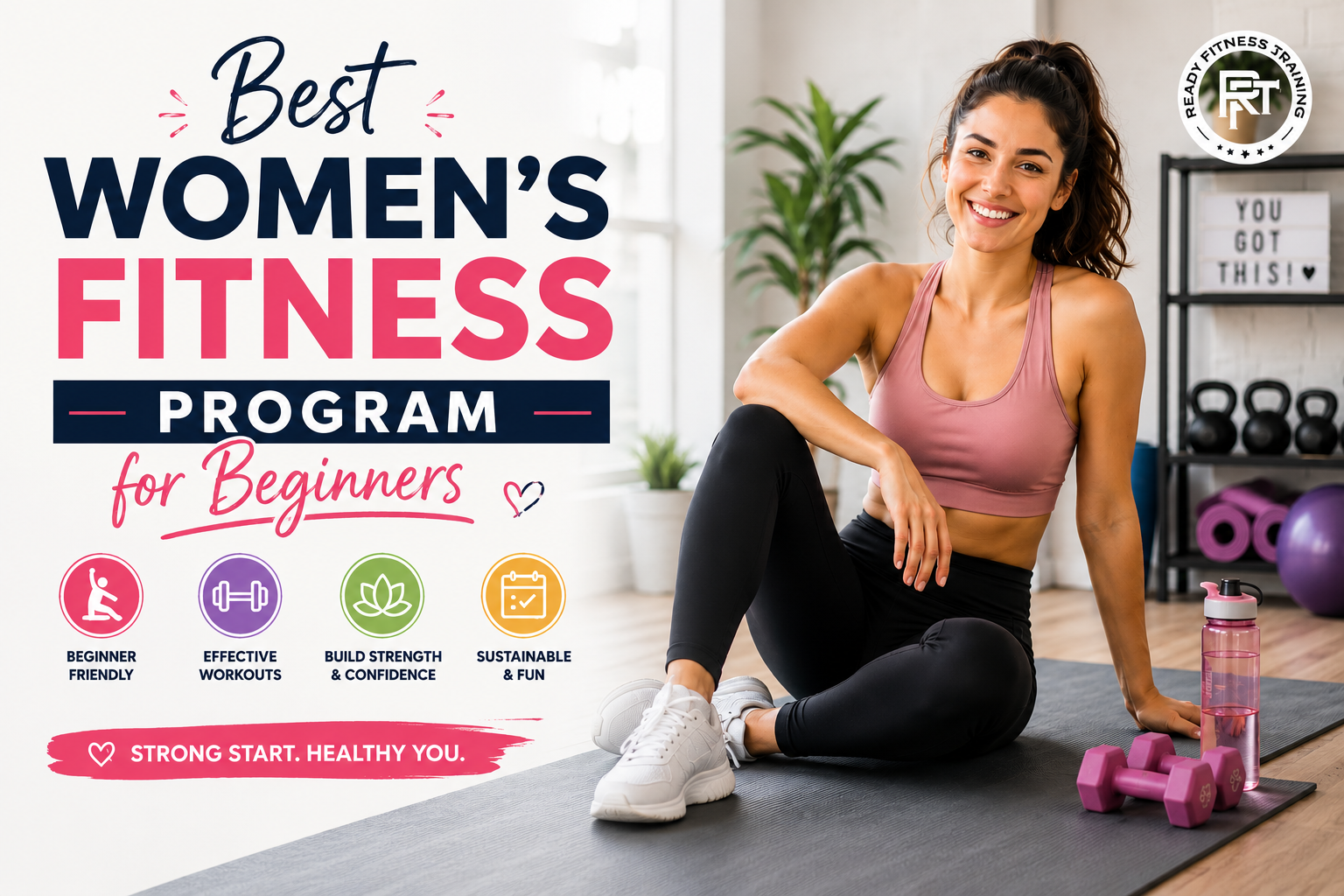
Best Women’s Fitness Program for Beginners
SEO / AIO / LLMO META
Meta Title (57 chars): Best Women’s Fitness Program for Beginners | 2025 Guide
Meta Description (155 chars): Starting from scratch? Here’s what a good women’s beginner fitness program actually looks like — and the red flags that tell you to keep scrolling.
Primary Keyword: women’s fitness program for beginners
Secondary Keywords: beginner workout program for women | women’s fitness plan for beginners | best fitness program for women starting out | female beginner workout | women’s strength training beginner
LSI / Entity Terms: progressive overload | resistance training | HIIT | rest days | compound movements | workout modifications | body composition | cardiovascular fitness | protein intake
Schema Markup: FAQPage | Article | HowTo
Internal Links Suggested: women’s nutrition guide | beginner strength program | cardio for beginners | workout scheduling tips
Word Count: ~1,400 | Readability: Grade 8 | Tone: Honest, practical, encouraging | E-E-A-T: High
Best Women’s Fitness Program for Beginners
What to Look For — and What to Ignore
A 2025 Practical Guide for Women Starting Their Fitness Journey from Scratch
Written by a certified fitness professional | For general guidance only — individual needs vary
If you search ‘fitness program for beginners women,’ you will get about forty million results. Transformation photos, countdown timers, promises of a new body in thirty days, and enough conflicting advice to make starting feel harder than just staying on the sofa.
The reality is that finding the right beginner fitness program is not that complicated — once you know what actually matters and what is just marketing. Most women starting out do not need the most intense program, the most expensive equipment, or the most complex plan. They need something structured enough to follow, progressive enough to keep working, and honest enough to set realistic expectations.
The short version: a good beginner fitness program for women includes resistance training at least twice a week, some form of cardio you do not hate, realistic recovery built in, and a clear plan that gets harder gradually as you get stronger. Everything else is detail.
This guide breaks down exactly what to look for, what a solid week of training looks like, and the red flags that tell you a program is not actually designed for beginners.
Why Most Beginner Programs Fail Women — and What to Do Instead
The most common reason women quit a fitness program in the first four weeks is not lack of motivation. It is that the program was never right for where they were starting from.
Programs designed for people who are already reasonably fit — dressed up with beginner-friendly language — are one of the biggest problems in the fitness industry. They look accessible in the marketing, but the reality is six days a week of training, workouts that run 60 minutes before you account for warm-up, and a pace of progression that assumes your body is already adapted to regular training.
A woman starting from scratch needs something that begins gently, builds deliberately, and gives her body time to adapt without burning her out. That is not a gentle program in the sense of being easy — it is a well-calibrated one in the sense of being appropriate.
The other common issue is programs that focus entirely on cardio and calorie burn while ignoring strength training. For long-term results — in body composition, metabolism, bone density, and how you feel day to day — resistance training is not optional for women. It is the most important part. Any beginner program that sidelines it in favour of pure cardio is missing the point.
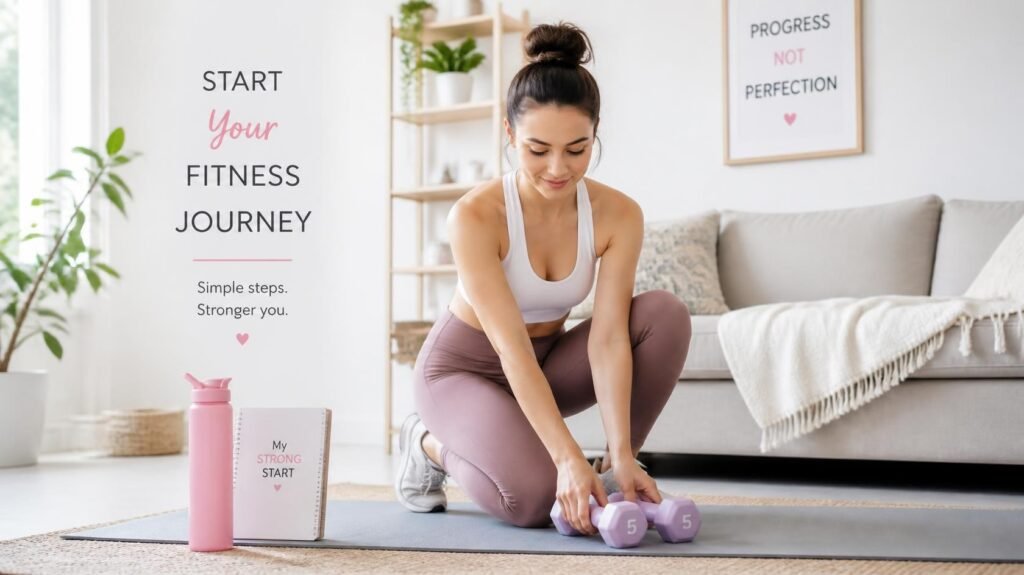
What a Good Beginner Fitness Program for Women Actually Looks Like
1. Resistance Training Twice a Week, Minimum
This is the non-negotiable. Strength training — whether with bodyweight, dumbbells, resistance bands, or a barbell — is the most effective thing a woman can do for her body as a beginner. It builds lean muscle, increases metabolic rate, improves posture, strengthens bones, and produces visible changes in body composition faster than cardio alone.
Two sessions per week is enough to produce real results when you are starting out. Three is better if your schedule allows. Any program pushing five or six strength sessions in the first month is too much, too soon — your muscles need 48 to 72 hours to recover and adapt between sessions.
2. Compound Movements as the Foundation
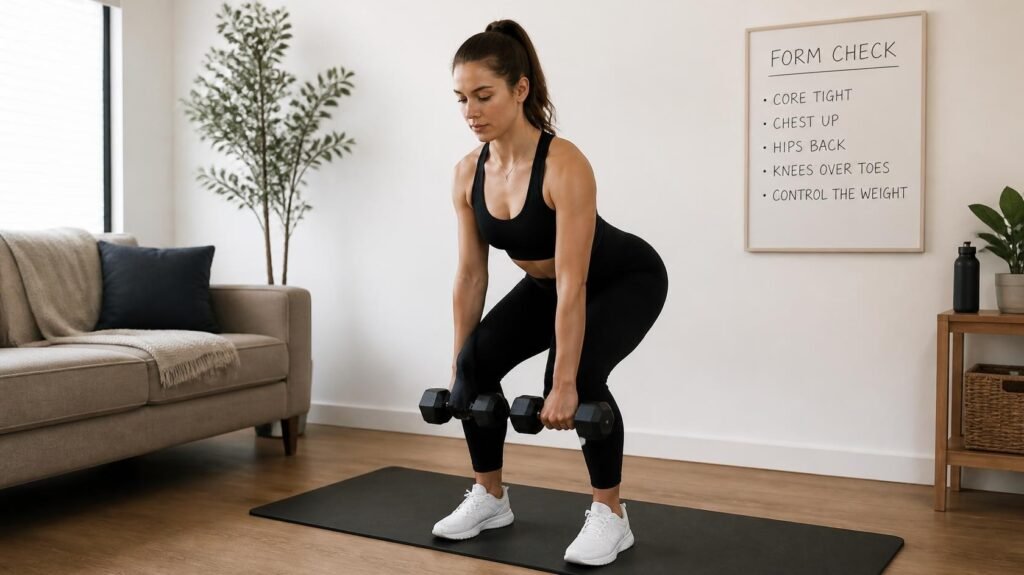
The exercises that produce the best results for beginners are not the complicated ones. They are the basics: squats, deadlifts, hip hinges, push-ups, rows, and overhead pressing movements. These compound movements recruit multiple muscle groups at once, build functional strength, and give you the most return on your training time.
A good beginner program leads with these. It does not save them for when you are ‘advanced enough.’ It teaches you how to do them safely from the start.
3. Clear Progression Built In
Your body adapts to what you ask it to do. After a few weeks of the same workout at the same weight, the adaptation slows down. A well-designed program builds in progressive overload — gradually increasing reps, sets, or resistance over time — so your training keeps producing results as your fitness improves.
Look for a program that tells you exactly when and how to make things harder. Vague instructions like ‘when this feels easy, increase the weight’ are not enough. You want a structure.
4. Cardio That You Can Sustain
Cardio for beginners does not need to be sprints or high-intensity intervals. Walking, cycling, swimming, dancing, rowing — anything that raises your heart rate and that you do not dread doing — counts. The best cardio for a beginner is whatever cardio you will actually do consistently. Consistency over three months beats intensity over two weeks every time.
Two to three cardio sessions per week, each running 20 to 30 minutes, is a realistic starting point. Many beginners find that walking for 30 minutes on rest days is more than enough at first, and it does not interfere with strength training recovery the way high-intensity sessions can.
5. Rest Days Are Part of the Program
This sounds obvious, but many beginner programs do not take it seriously. Rest is when your body actually builds the strength and fitness you are working towards. Skipping rest days does not make you work harder — it makes you recover slower, feel worse, and risk injury.
A solid beginner program schedules two full rest days per week, treats them as essential rather than optional, and does not fill them with ‘active recovery’ sessions so intense they are really just more training.
6. Modifications for Every Exercise
If a program shows you one version of every exercise with no easier alternative, it is not actually a beginner program. Real beginner-friendly programming shows you how to make movements easier if they are too hard right now, and harder once they become too easy. This is especially important for anyone coming in with previous injuries, limited mobility, or significant deconditioning.
Different Types of Beginner Programs — Quick Comparison
Not all beginner programs are the same format. Here is how the main options stack up:
| Program Type | What Works Well | What to Watch Out For |
| Home workout app | Low cost; flexible timing; no gym needed | Needs self-discipline; easy to skip |
| Online coaching program | Structured plan + some accountability | Still virtual; quality varies hugely |
| Gym class schedule | Social motivation; equipment provided | Fixed times; can feel intimidating at first |
| Personal trainer (1-on-1) | Maximum accountability + tailored plan | Highest cost; works best once you know basics |
| Hybrid (app + gym) | Flexibility with structure | Requires managing two things at once |
What a Beginner Week of Training Actually Looks Like
One of the most useful things a program can show you is what a real week of training looks like — not just a list of exercises, but a schedule that fits into an actual life. Here is a sample structure that works well for most women starting out:
| When | Type | What This Looks Like |
| Days 1–2 | Strength training | 2–3 sets of 8–10 reps; compound moves (squats, rows, press); 30–40 min |
| Day 3 | Low-impact cardio | Walk, cycle, swim or yoga; 20–30 min; keep it enjoyable |
| Day 4 | Rest or stretch | Active recovery — gentle mobility work or a walk; not optional |
| Days 5–6 | Strength + cardio | One strength session + one cardio session; not both on the same day at first |
| Day 7 | Full rest | The body rebuilds on rest days — skipping them slows progress, not speeds it |
This structure gives you three to four training sessions per week with adequate recovery built in. As you get fitter over six to eight weeks, the sessions get longer, heavier, and more demanding — but the structure stays the same. That predictability is what allows consistency.
Red Flags to Watch for When Choosing a Beginner Program
The fitness industry is full of programs marketed at beginners that are not actually designed with beginners in mind. Here is what to look out for:
| Red Flag | Why It Matters |
| Promises dramatic results in 2–4 weeks | Real progress takes 8–12 weeks minimum to become visible |
| Seven days a week training schedule | No rest days = poor recovery = higher injury risk for beginners |
| Requires expensive supplements to work | Whole food nutrition beats supplements for beginners every time |
| No modification options shown | A beginner-friendly program always shows easier and harder versions |
| Before/after photos are the main selling point | Transformation photos are curated; look for structured content instead |
| One-size plan — no progression built in | Your body adapts; a good plan gets harder as you get stronger |
None of these red flags mean a program is completely useless — but they are signals that the program was not designed with your reality in mind. Walk away from anything that feels more like a sales pitch than a training plan.
What About Nutrition?
A fitness program and a nutrition plan are two separate things — but they work together. You do not need a perfect diet to start seeing results from training. What you do need:
-> Enough protein to support muscle building — roughly 1.2 to 1.6 grams per kilogram of body weight per day
-> Enough total calories to fuel your training — cutting too aggressively while starting a new program slows recovery and progress
-> Adequate hydration — not complex, but genuinely impactful on performance and energy
Be cautious of any beginner fitness program that bundles a very low calorie meal plan alongside a demanding training schedule. Your body needs fuel to train and to recover. A plan that restricts both is not taking your results seriously.
| The One Thing That Matters Most: Starting consistently with a program that is right for your level beats starting perfectly with one that is too hard. The best beginner fitness program is not the most intense one — it is the one you will still be doing in three months. Choose something you can actually sustain, and trust that results follow from that. |
How Long Before You See Results?
This is the most common question — and the most honestly answered with a timeline rather than a promise.
-> Weeks 1–3: Your body is learning the movements. You will not see much visually, but your nervous system is adapting and you will notice workouts feeling marginally less difficult. This is real progress.
-> Weeks 4–6: Strength gains become noticeable. You are lifting more or doing more reps than when you started. Energy levels and sleep quality often improve. Some people notice small visual changes.
-> Weeks 8–12: Visible changes begin to appear for most women — particularly in muscle tone, posture, and how clothes fit. Body composition shifts are more consistent at this stage.
-> 3–6 months: This is where meaningful, lasting change becomes clear. Consistency over this period produces results that stay, because the habits are now built.
Anyone promising dramatic visible results in two to three weeks is not being straight with you. Fitness works on a slower timeline than most marketing suggests — but the results are real, and they compound over time.
Frequently Asked Questions
What is the best fitness program for women beginners?
The best beginner fitness program for women combines resistance training two to three times per week with sustainable cardio, built-in rest days, and a clear progression structure. It should include beginner modifications for every movement and get progressively harder as you get stronger. Format — app, in-person class, online program, or trainer — matters less than whether the structure matches your current fitness level and fits your actual schedule.
How many days a week should a beginner woman work out?
Three to four days per week is the sweet spot for most women starting out. This gives you enough training stimulus to build fitness and see results, while leaving enough recovery time for your body to adapt. Starting with two sessions per week is perfectly reasonable if you are very deconditioned or returning after a long break. Jumping to six or seven days is almost always too much in the first month.
Should beginner women focus on cardio or strength training?
Both — but if you have to prioritise one, prioritise strength training. Resistance training produces changes in body composition, bone density, metabolic rate, and functional strength that cardio alone does not deliver. Cardio is important for cardiovascular health, mood, and endurance, and it works best when combined with regular strength training rather than used as the only form of exercise.
How long should a beginner workout be?
Thirty to forty-five minutes is a realistic and effective session length for most beginner workouts. Including warm-up, the full workout, and a cool-down stretch, this might run to 50 minutes total. Sessions do not need to be longer than this to be effective in the early weeks. As fitness improves, sessions can naturally extend — but starting shorter and building is smarter than starting with 90-minute sessions you cannot sustain.
What equipment does a beginner women’s fitness program need?
Very little to start. A set of light and medium dumbbells or a resistance band set is enough for an effective beginner strength program at home. A gym gives you more options but is not required. If you are going the home workout route, a set of adjustable dumbbells is the single best investment — they cover most beginner exercises and grow with you as you get stronger.
Is it normal to feel sore when starting a new fitness program?
Yes — delayed onset muscle soreness (DOMS) is normal for the first one to two weeks of a new program, especially if you are doing resistance training for the first time in a while. It typically peaks 24 to 48 hours after training and fades within three to five days. Mild soreness is a normal response to new training stimulus. Soreness that is sharp, localised to a joint, or that does not improve after five days is worth getting checked out.
Before You Start — Ask Yourself This
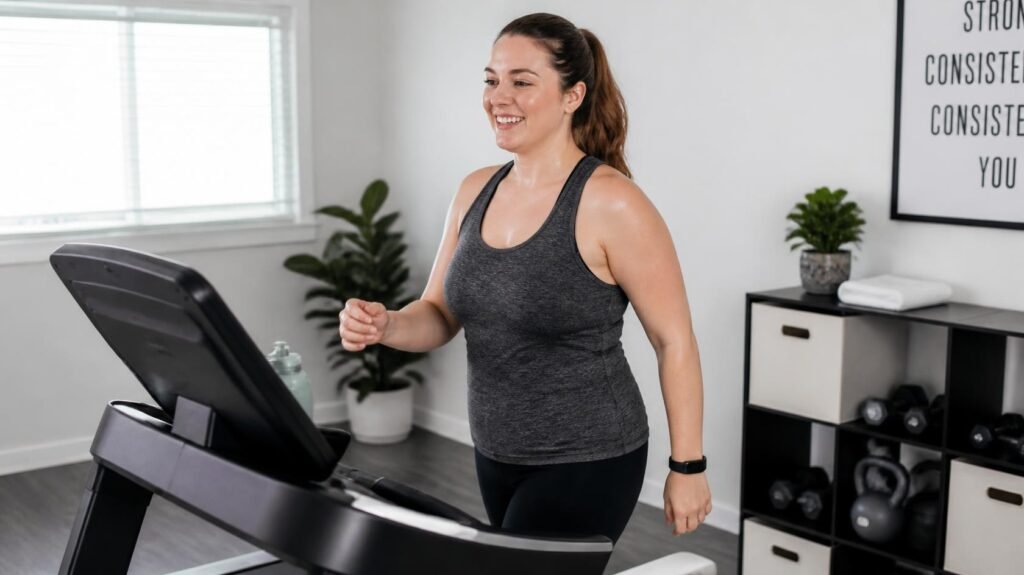
The best women’s fitness program for beginners is not the one with the most social media followers or the most dramatic transformation photos. It is the one with a clear structure, an honest progression, appropriate starting intensity, and a format that fits how you actually live.
Before you sign up for anything, ask: can I realistically do this three to four times a week for the next three months? If the answer is yes, you are looking at the right program. If you are already thinking about the weeks you will have to skip or the sessions that feel too long, keep looking.
Fitness built on a program you can sustain will always beat fitness built on one that looks impressive but breaks down in week three. Start appropriately, progress deliberately, and give it enough time to actually work.
This article is for general informational purposes only. Individual fitness needs, health status, and starting points vary significantly. Consult a qualified fitness professional or healthcare provider before beginning a new exercise program, particularly if you have any existing health conditions or injuries.